Scholarship App


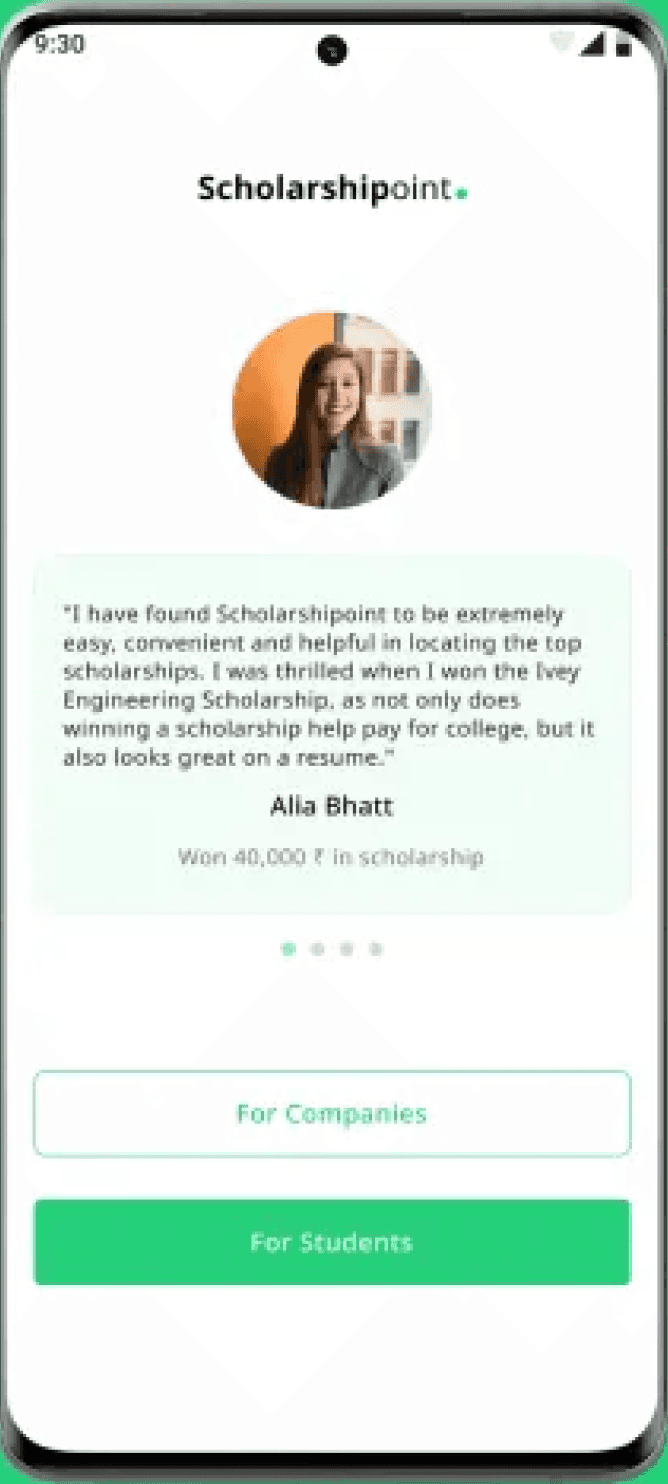
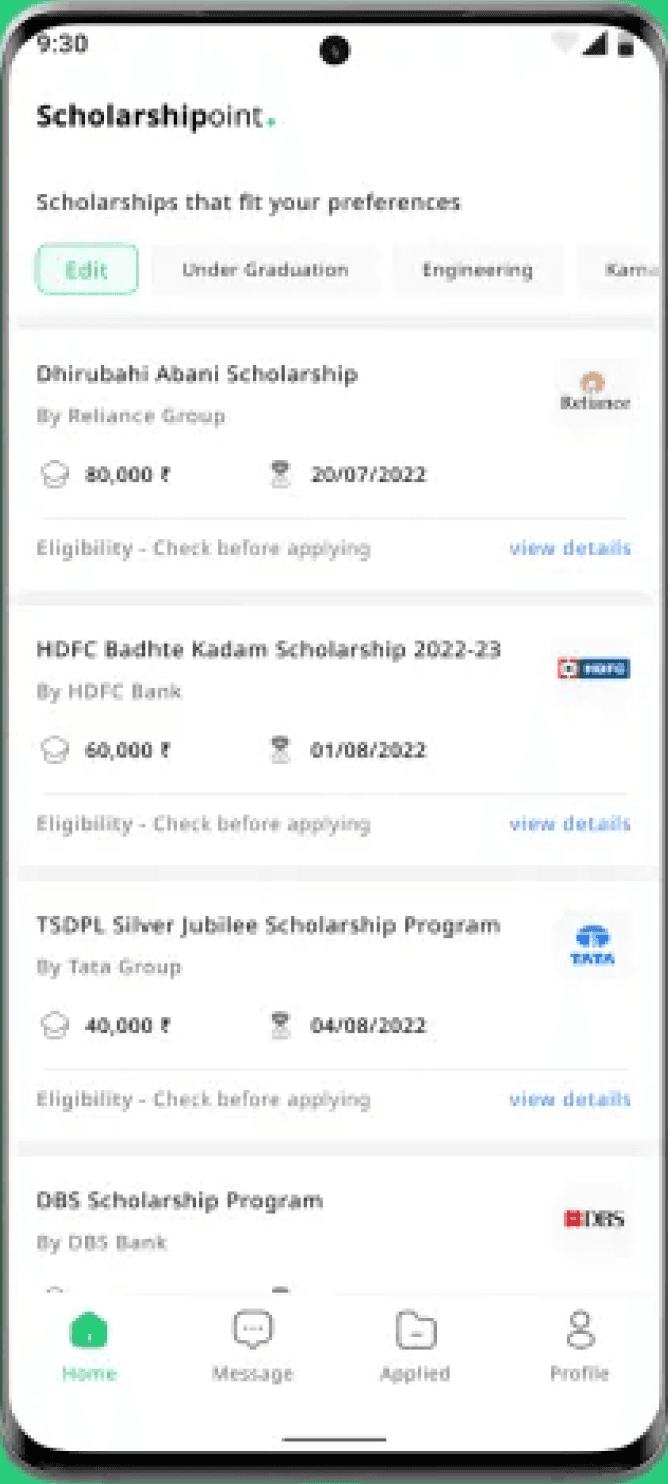
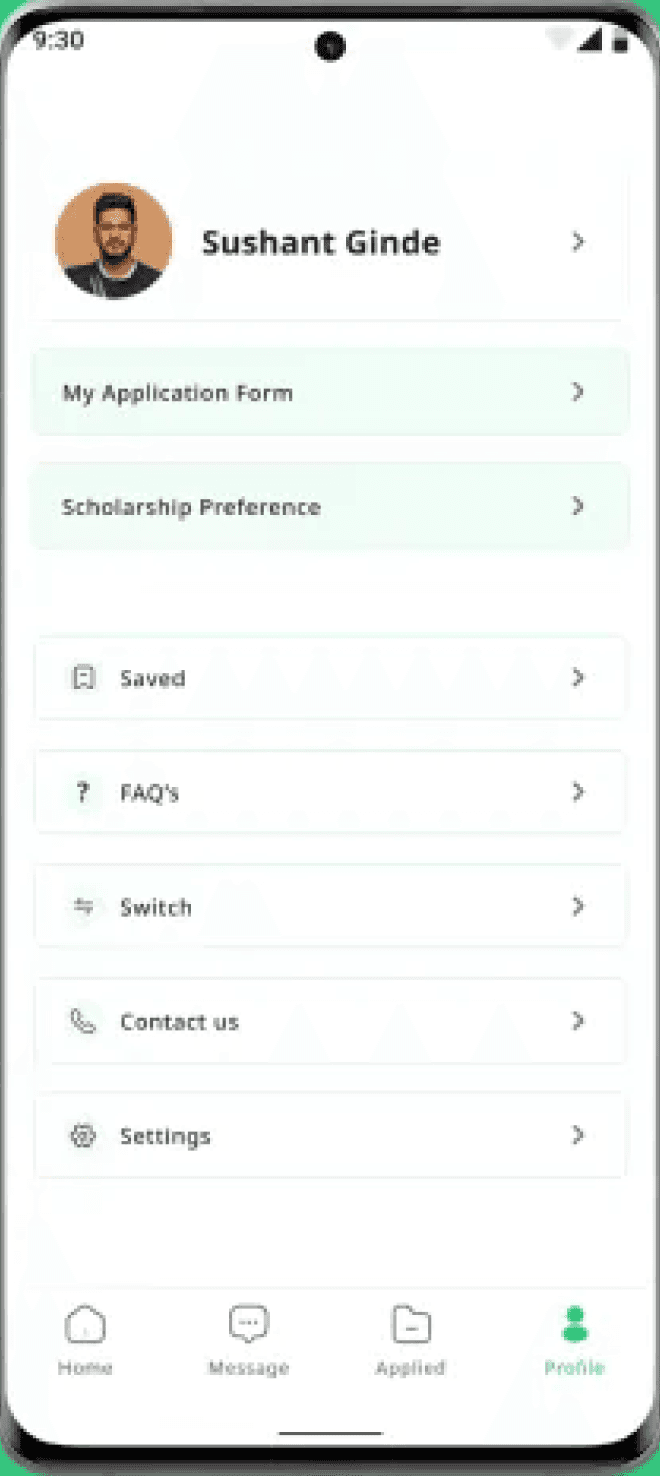
Scholarship App
Sector
Education, CSR, Scholarship
My Role
Entire product design, UX Research, UX Design, UI Design, Prototyping
Tools
Figma, Figjam, Illustrator
Project Name
Scholarshipiont: Bridging Students and Corporate CSR Initiatives
Project Duration
2 months
Overview
Scholarshipiont is a platform designed to empower students by connecting them with corporate-sponsored scholarships. By aligning the educational aspirations of talented students with companies’ CSR initiatives, the app fosters a mutually beneficial ecosystem of learning, support, and social impact.
Purpose of the App
Scholarshipiont simplifies the scholarship application process, making it accessible and efficient for students. Simultaneously, it provides companies with a streamlined way to manage and promote their CSR programs, ensuring their contributions make a tangible difference. Scholarshipiont creates a bridge where students can dream bigger, and companies can make those dreams a reality—one scholarship at a time.
Problem Statement
For Students: Students encounter significant barriers in accessing scholarships that could support their educational aspirations. These challenges include
Lack of Transparency: Difficulty tracking application statuses, leading to uncertainty and frustration.
Overwhelming Options: Struggling to identify scholarships relevant to their field of study amidst a sea of opportunities.
Repetitive Processes: The tedious and time-consuming task of filling out similar forms for every new application.
Repetitive Processes: The tedious and time-consuming task of filling out similar forms for every new application.
For Companies: Corporations aiming to make an impact through CSR initiatives face obstacles such as
Identifying Talent: Difficulty in finding the right candidates who align with their scholarship criteria.
Program Visibility: Challenges in promoting their scholarship programs effectively to the target audience.
Transparency and Accountability: Ensuring a fair and efficient selection process, especially when partnering with external organizations for program administration.
Resource Constraints: Limited resources to manage and track the effectiveness of their scholarship programs.
Design Process
Meeting With Stakeholders
Secondary Research
Primary Research
Building Personas
Solutions
User Flow/ IA
Low Fidelity wireframes
Building Design System
High Fidelity Wireframes
Prototyping
User Testing
Stakeholder Meeting Overview
At the onset of the UX design process, I conducted an in-depth meeting with the project stakeholders to align on the vision, objectives, and expectations for the scholarship app. During this session:
Understanding Goals: Stakeholders outlined their primary goals of bridging the gap between talented students and CSR-driven companies, ensuring a seamless experience for both parties.
Defining Success: We discussed success metrics, such as increased application submissions, improved scholarship visibility, and enhanced user satisfaction.
Exploring Challenges: Stakeholders shared the pain points faced by students (e.g., lack of transparency, repetitive processes) and companies (e.g., difficulty identifying talent, resource constraints).
Clarifying the Vision: The stakeholders emphasized their desire for a user-centric platform that simplifies scholarship applications while enhancing accountability and transparency for companies.
Establishing Collaboration: We defined clear roles and expectations for the design and development process, ensuring continuous feedback loops to align the product with stakeholder objectives.
At the onset of the UX design process, I conducted an in-depth meeting with the project stakeholders to align on the vision, objectives, and expectations for the scholarship app.
Secondary Research Overview
To gain a deeper understanding of the challenges companies face in implementing CSR-based scholarship programs, I conducted comprehensive secondary research using a variety of credible sources, including academic journals, industry reports, news articles, and case studies.
Research Focus: The study aimed to uncover key pain points such as program implementation barriers, candidate selection difficulties, and transparency concerns.
Search Strategy: Keywords like “CSR scholarships,” “corporate social responsibility in education,” “scholarship program challenges,” and “education funding initiatives” guided the research process.
Source Evaluation: Each source was critically assessed for relevance, credibility, and reliability to ensure the insights were actionable and aligned with industry standards.
Key Findings: The research highlighted common challenges, including a lack of awareness among students, inefficient candidate evaluation processes, and accountability issues in collaborative programs.
This research formed a solid foundation for identifying user needs and aligning the design approach with both student and corporate requirements, ensuring a user-centric solution.
Goals for Secondary Research:
Understand the Project Context
Identify Potential Opportunities
Analyse Competitor Landscape
Assess Stakeholder Needs
The data is sourced from Government of India Ministry of Corporate affairs. https://www.csr.gov.in/
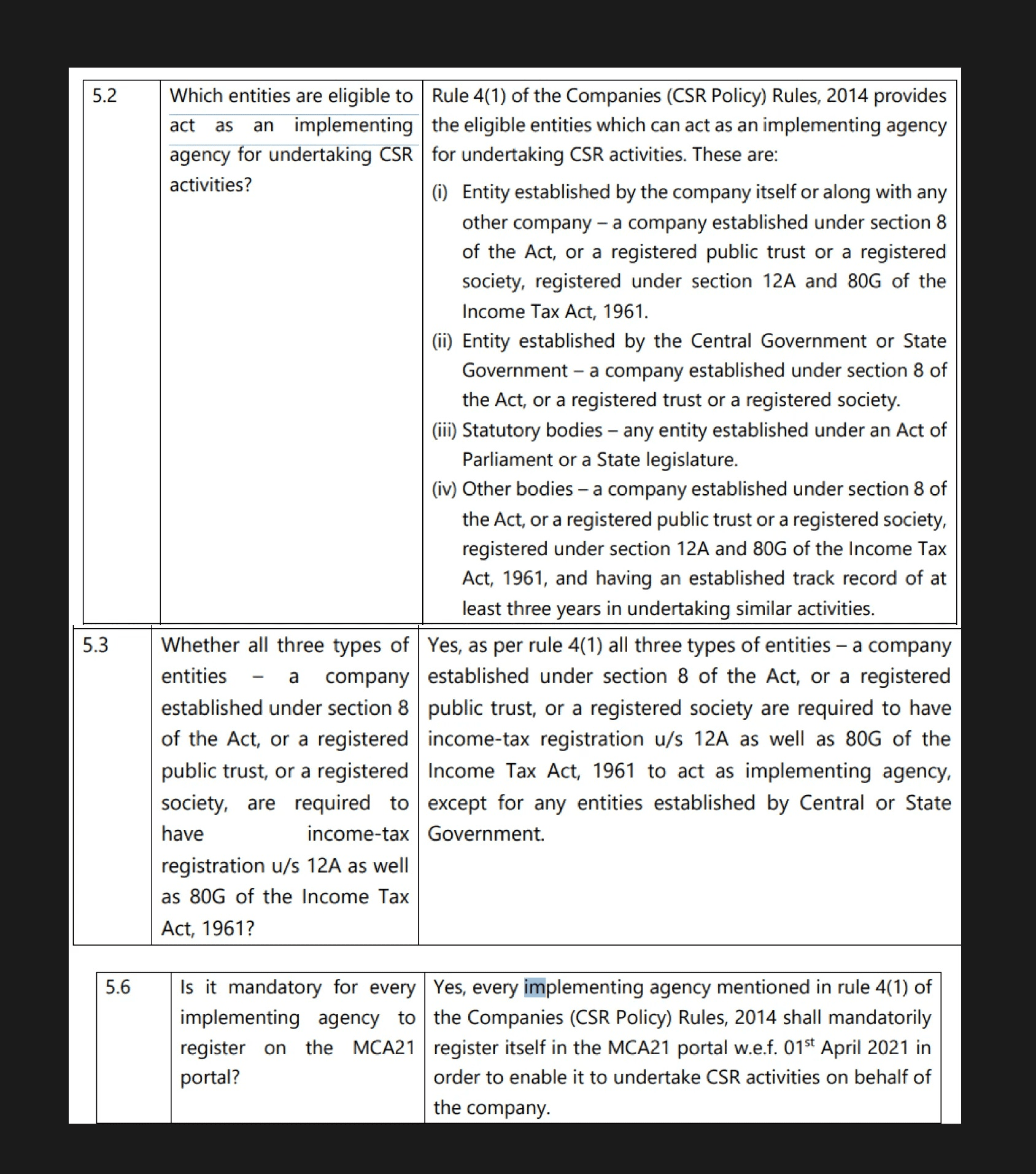
General Circular №14 /2021
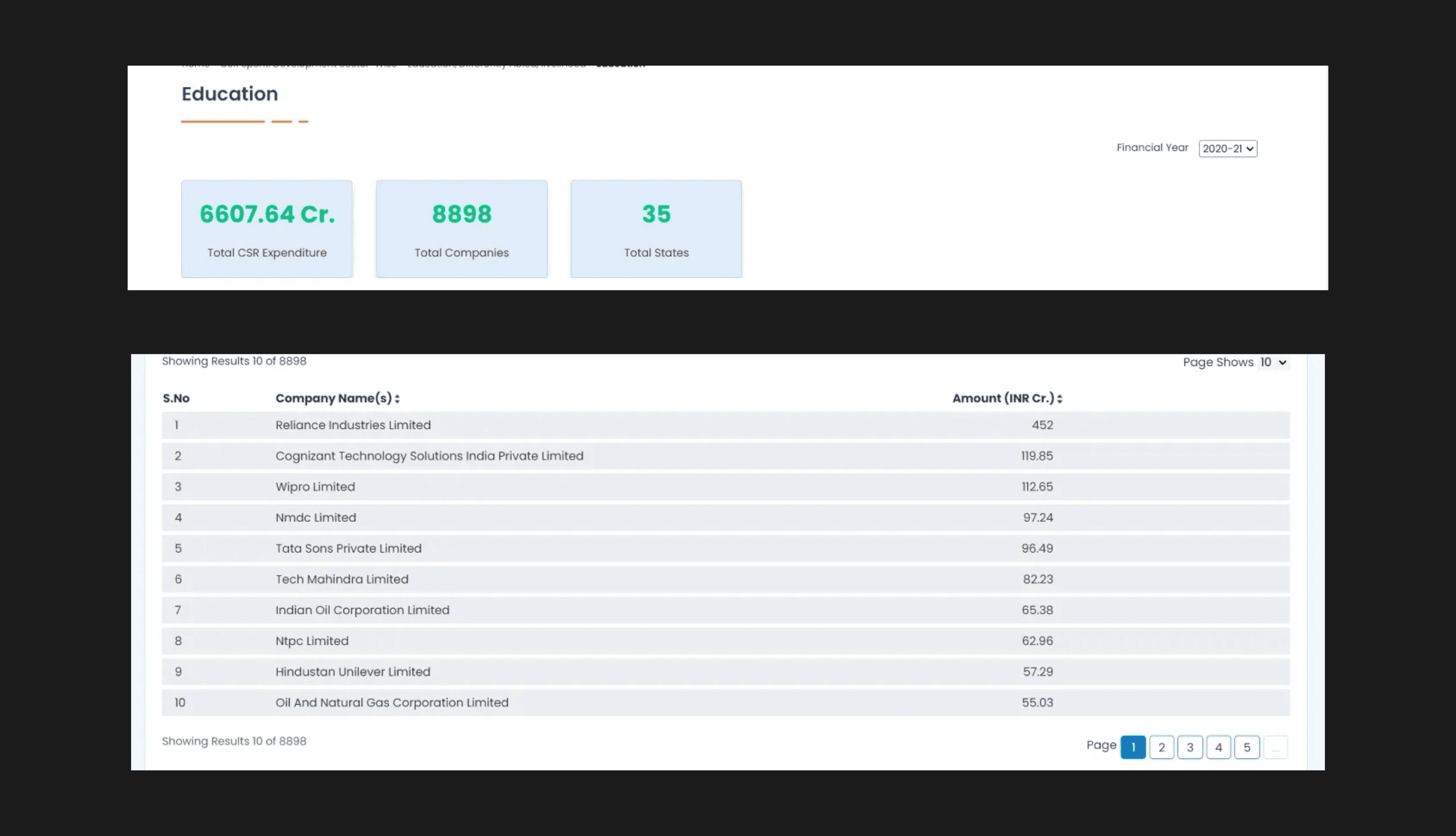
CSR expenditure on education in FY 2020-2021.
Key Findings from Secondary Research
Student Challenges: Difficulty in finding relevant scholarships, lack of application transparency, and repetitive processes.
Company Challenges: Struggles in identifying candidates, promoting programs, and ensuring transparency in collaborations.
Competitor Gaps: Existing platforms lack user-friendly features and fail to bridge the gap between student and company needs.
Opportunities: Centralised platforms with automated matching, reusable templates, and real-time updates can enhance user experience.
Best Practices: Personalization, data-driven insights, and mobile-first designs improve accessibility and engagement.
Competitor Analysis
We identified two primary competitors in the Indian market
Key Findings from Secondary Research
Buddy4Study
Scholify Me (App and website were unavailable during research)
Buddy4Study “Buddy4Study stands as India’s premier scholarship platform, offering a centralised hub for users to access comprehensive details about scholarships from both governmental and private sector entities.

Strengths:
Established brand with a strong reputation.
Comprehensive scholarship database covering government and private programs.
Large and engaged user base.
Chatbot for addressing student queries efficiently.
Weaknesses:
External redirection required to complete some scholarship applications.
Repetitive form-filling process for each application.
Lack of transparency in application status, creating uncertainty for users.
Cluttered interface with excessive features and information, overwhelming users.
Limited personalisation; users must manually search for scholarships that match their interests.
Primary Research
Having thoroughly analysed our competitors, we now possess a comprehensive understanding of the prevalent challenges faced by students. Consequently, we have chosen not to conduct primary research on the students’ side.
Based on secondary research, we lack a clear understanding of the challenges faced by CSR companies. Therefore, we’ve opted for primary research in the form of user interviews to gather insights directly from the source.
User interviews
We conducted user interviews with 8 professionals from various companies’ who works in CSR ( Corporate Social Responsibility ) departments. These interviews were arranged by reaching out to them via LinkedIn and subsequently scheduling meetings on Google Meet.
Key insights from user interview
Through the user interviews, we gained insights into the challenges that companies encounter when implementing CSR-based scholarship programs
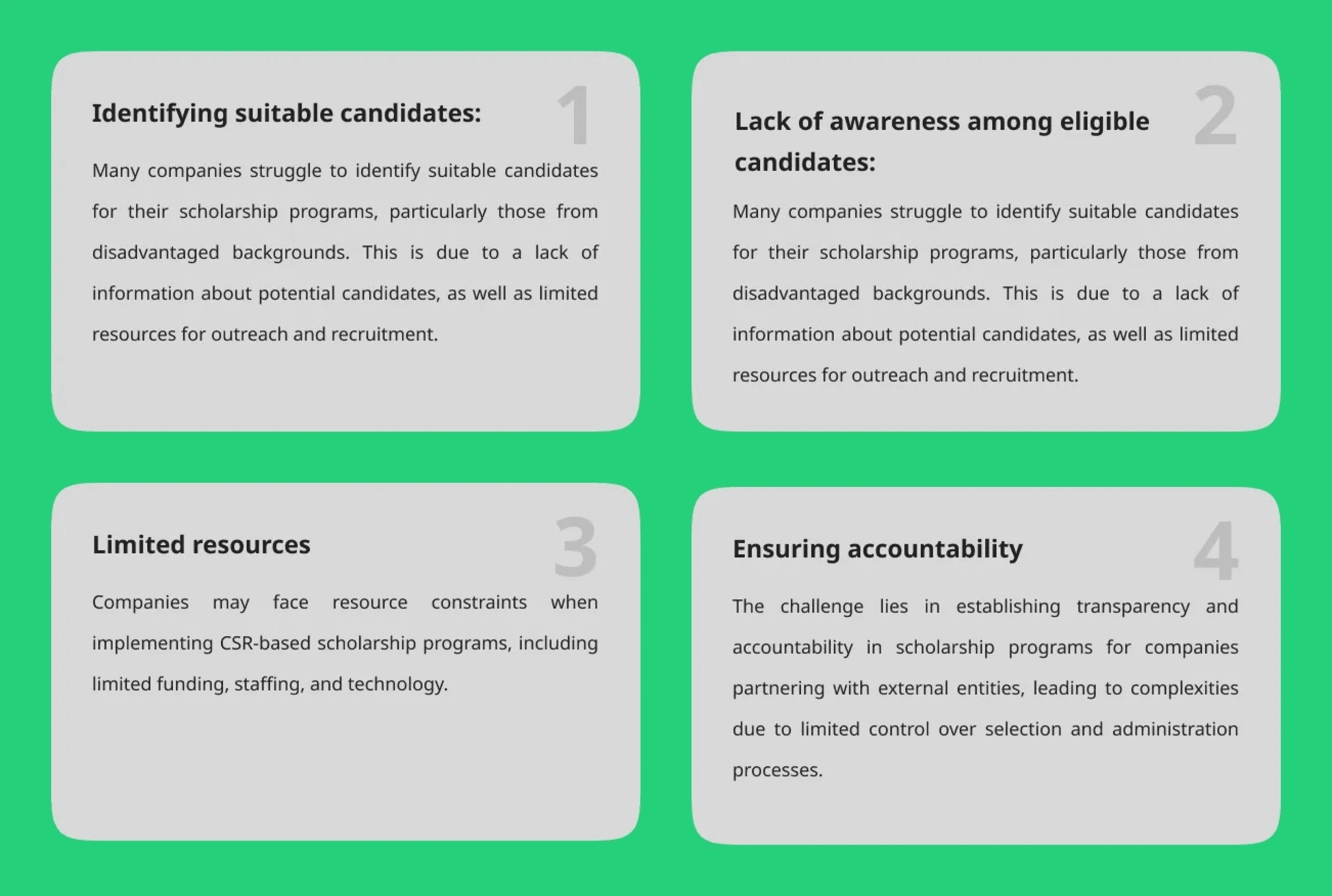
insights from user interview
User persona
Having thoroughly analysed our competitors, we now possess a comprehensive understanding of the prevalent challenges faced by students. Consequently, we have chosen not to conduct primary research on the students’ side.
Based on secondary research, we lack a clear understanding of the challenges faced by CSR companies. Therefore, we’ve opted for primary research in the form of user interviews to gather insights directly from the source.
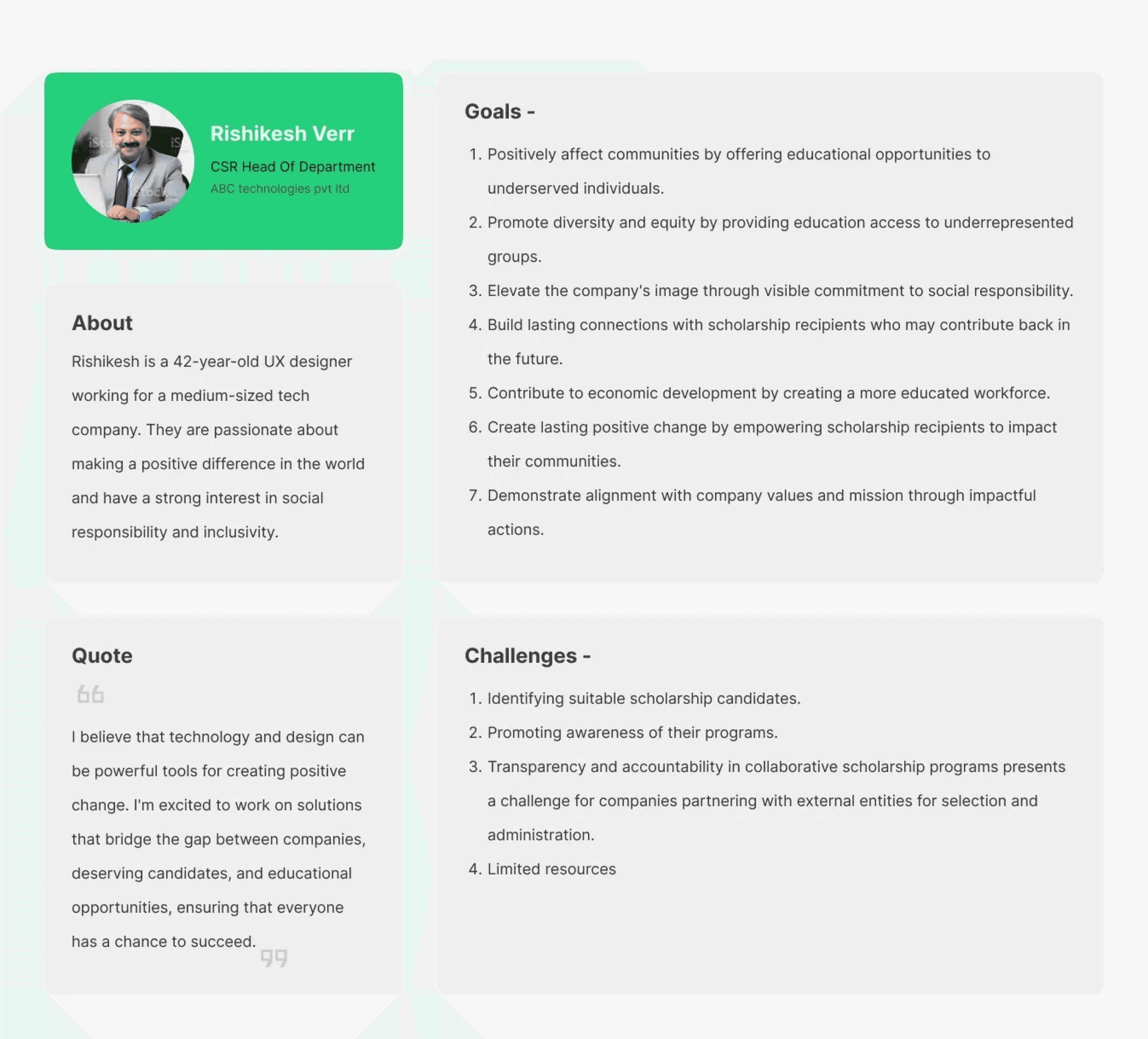
Persona 1 — CSR Companies
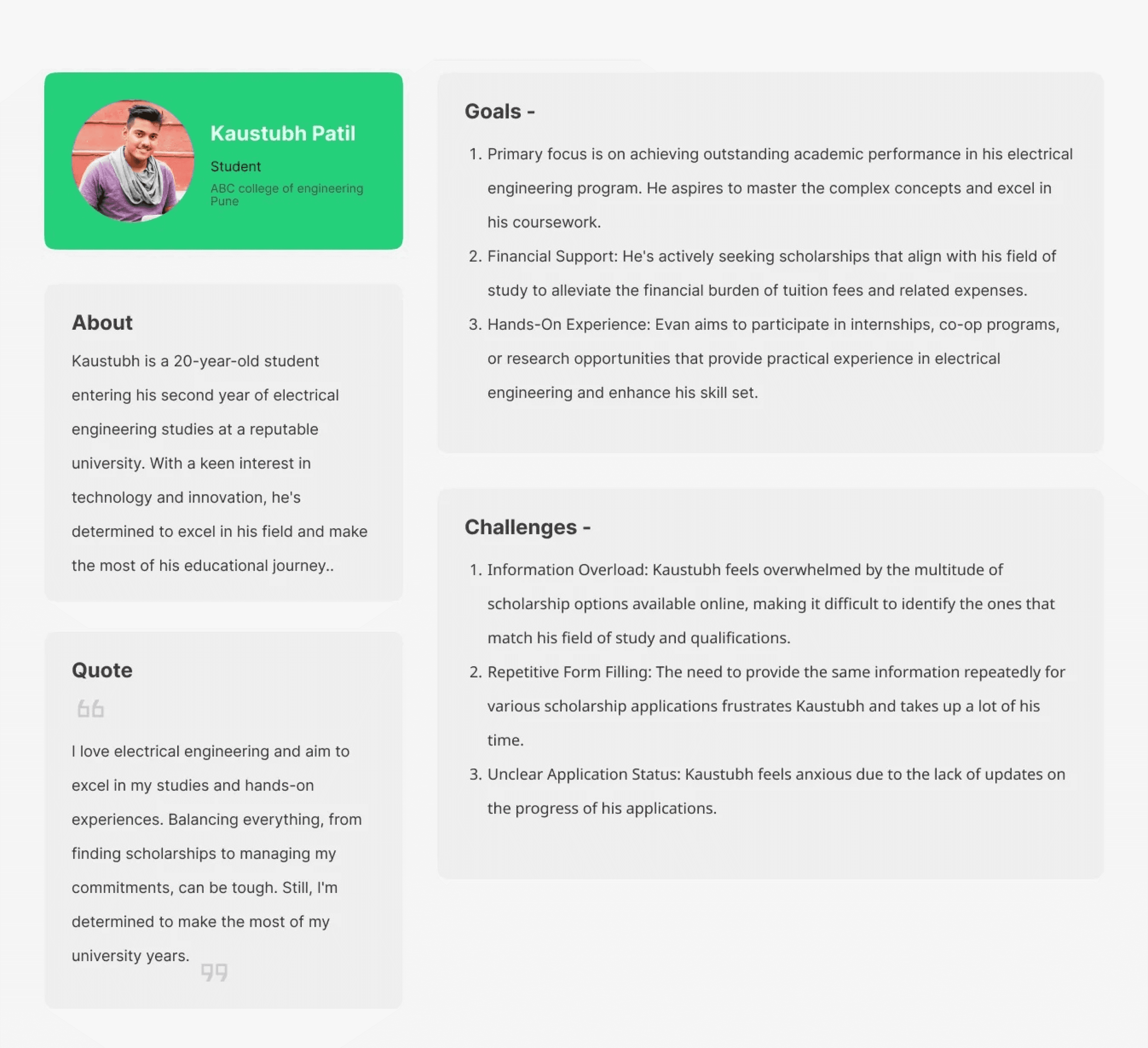
Persona 1 — CSR Companies
Solution Based on Secondary and Primary Research
By synthesising insights from both secondary and primary research, we propose a dual-platform solution tailored to meet the distinct needs of CSR companies and students.
For CSR Companies:
We propose a web-based platform that empowers CSR companies to efficiently manage their scholarship programs:
Streamlined Scholarship Posting: Companies can post detailed scholarship opportunities with clear eligibility criteria and timelines.
Advanced Candidate Matching: A comprehensive database of student profiles, including academic backgrounds, skills, and interests, enables companies to identify the most suitable candidates quickly and effectively.
Progress Tracking: Companies can monitor student applications throughout the process, gaining valuable insights into their selection pipelines.
Built-in Reporting Tools: Automated reporting and monitoring features ensure transparency and accountability in program administration, fostering trust among stakeholders.
Impact Measurement: Tools to track the success and outcomes of scholarships, helping companies measure their CSR impact.
For Students
We propose a mobile app that simplifies the scholarship application process for students:
Unified Profile Management: Students can create a single, reusable profile to store all necessary application information, saving time and effort.
Personalised Scholarship Matching: AI-driven algorithms recommend scholarships tailored to students' academic fields and interests.
Guided Application Process: Step-by-step guidance ensures students complete applications accurately and efficiently.
Centralized Dashboard: A user-friendly interface to manage multiple applications in one place, enhancing organization and reducing confusion.
The following design process focuses solely on the app’s (Student side) design, as I was primarily involved in the app’s development and design.
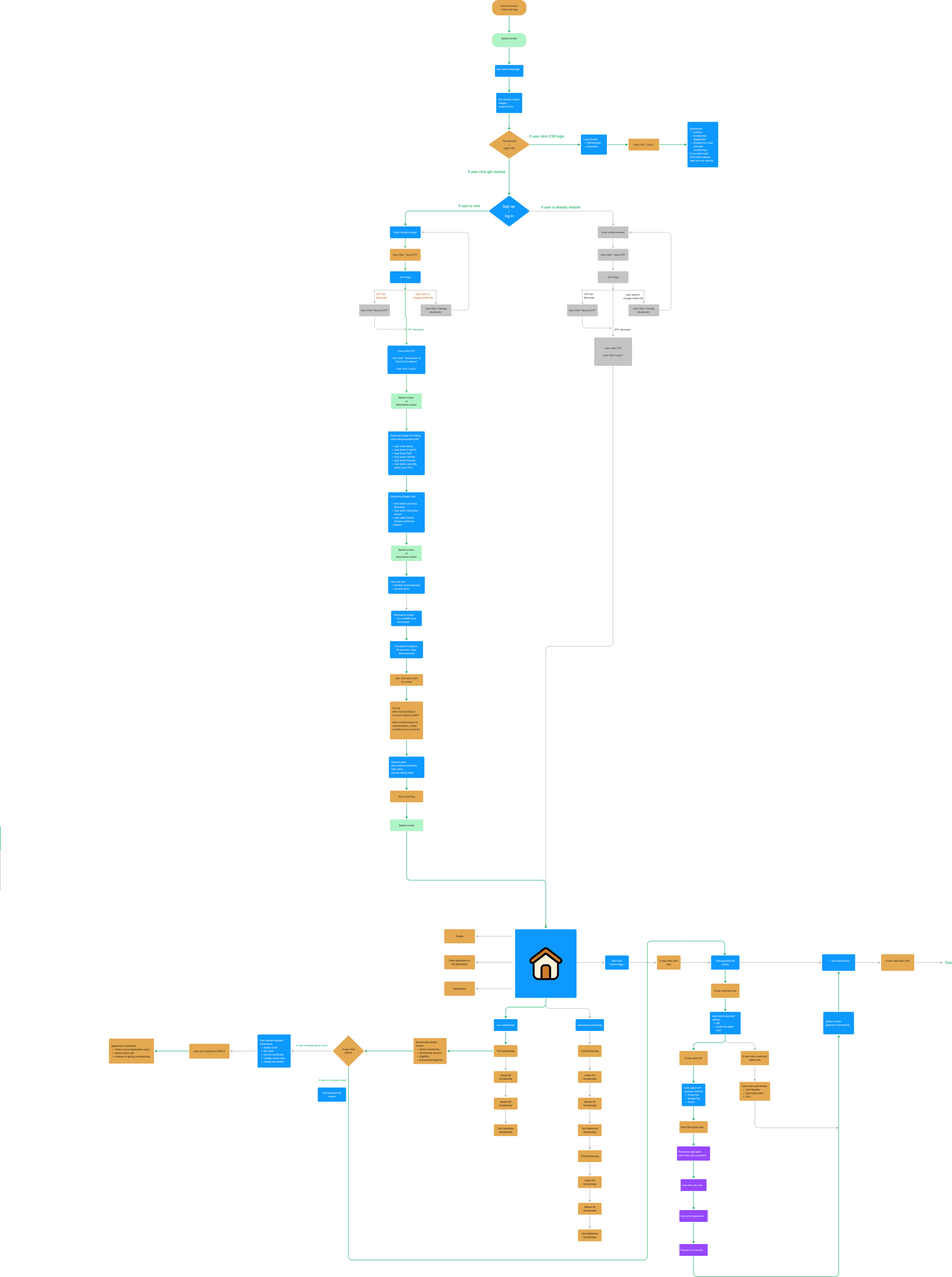
User flow/ Information Architecture (IA)
Building on the insights gained from the student persona, I designed a user flow that maps out the key steps and interactions a student would take to navigate the app. This ensures a seamless and intuitive experience, aligning with their goals and needs throughout the scholarship application process.
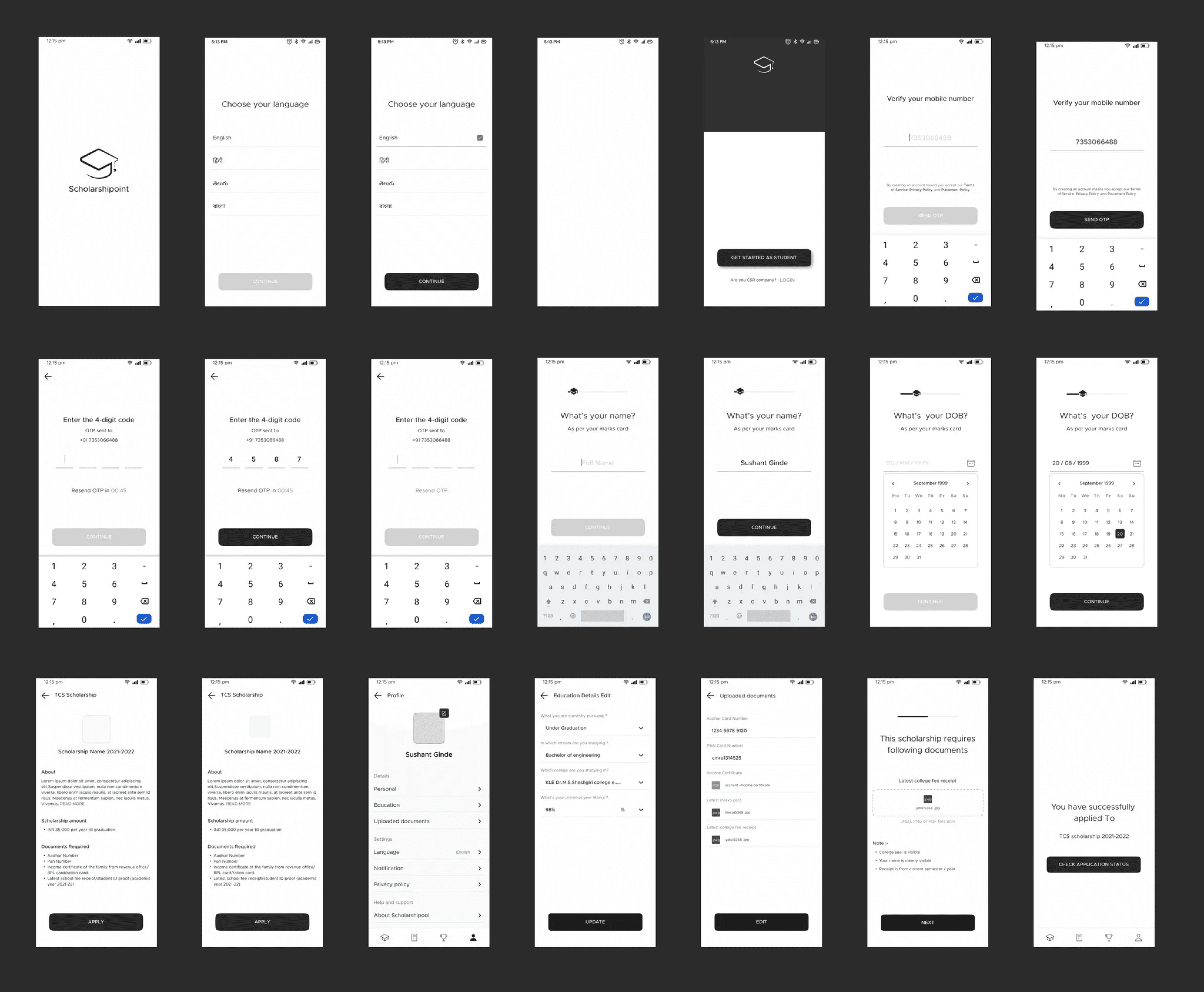
Medium Fidelity Wireframes
Meeting with Stakeholders
Following the creation of the medium-fidelity wireframe prototype, we conducted a meeting with stakeholders to showcase our progress and gather their valuable feedback. This collaborative session was crucial for aligning the design with project objectives, addressing any concerns, and ensuring the final solution effectively meets user and business needs.

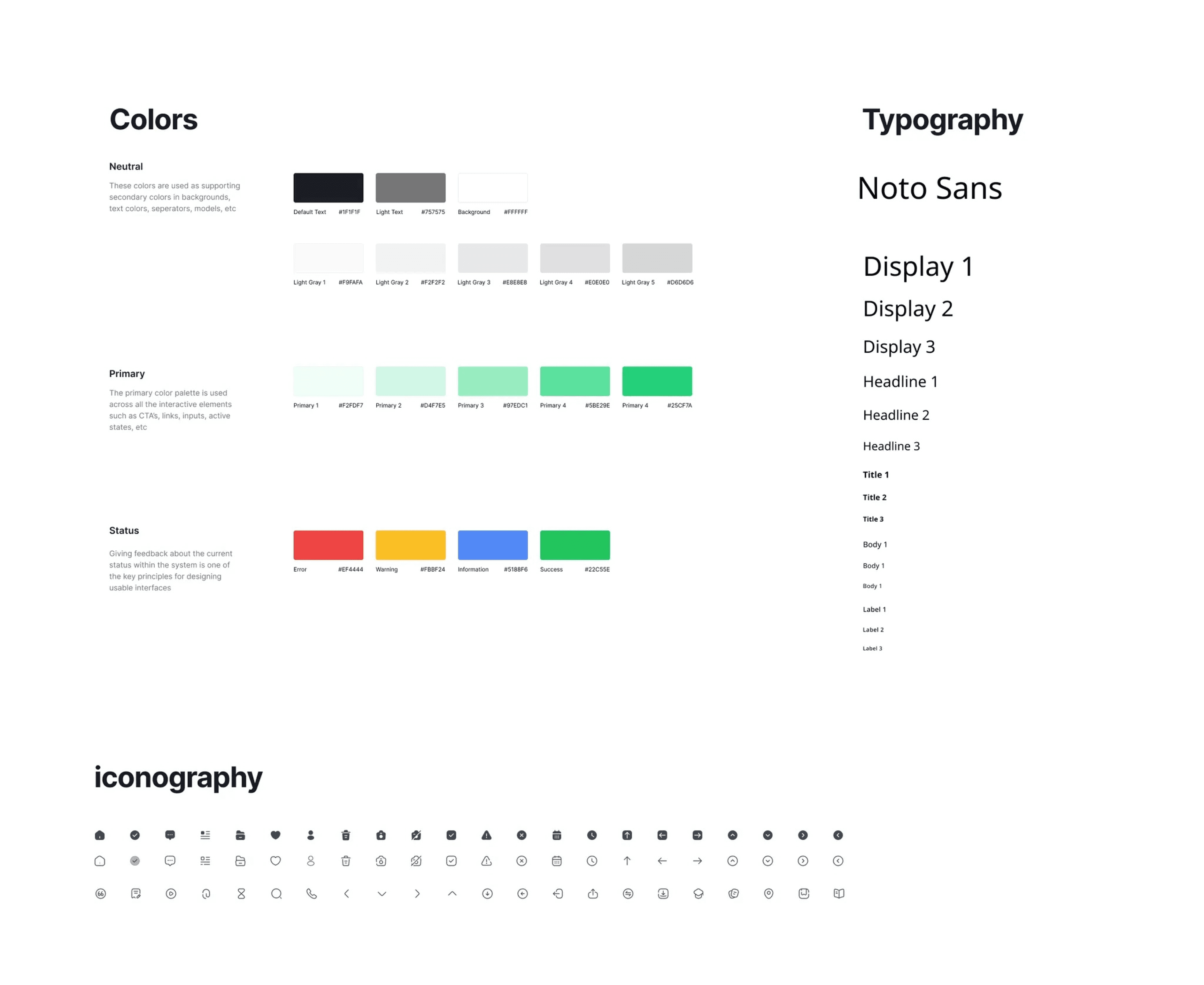
Building style guide
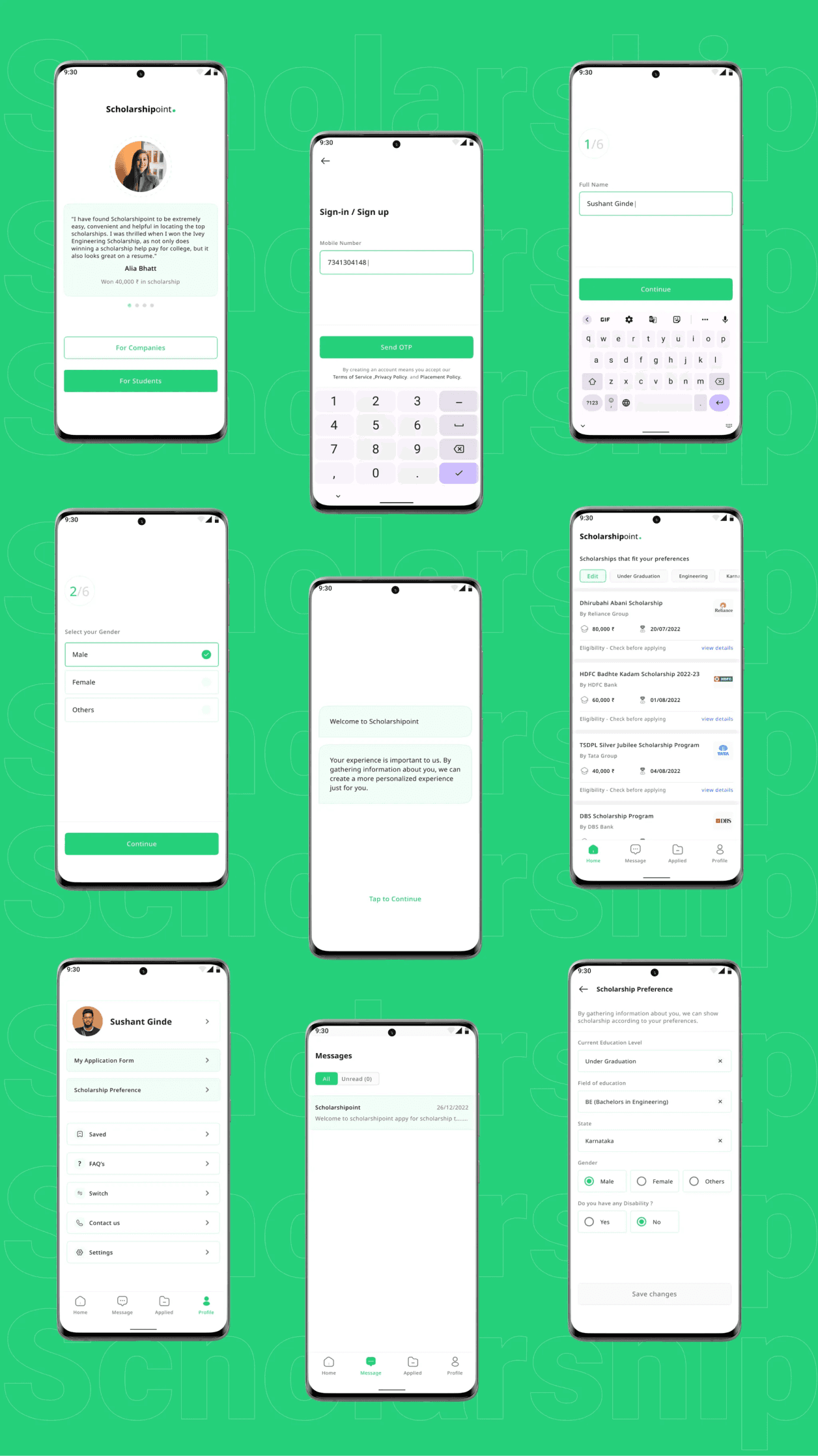
High Fidelity Wireframes
Conclusion
Thank you for taking the time to explore my case study. I deeply value your feedback, as it plays a pivotal role in shaping my journey as a designer. Your insights will inspire me to refine my skills and create even more impactful designs.
This project has been a transformative experience, teaching me that design is not just about aesthetics but about solving real problems and creating meaningful user experiences. It reinforced the importance of empathy, collaboration, and innovation in the design process.
I am excited to carry these lessons forward, striving to craft solutions that are not only functional but also resonate with users and make a positive impact.
If there was more time available…
I would have conducted more extensive user testing with both students and CSR companies to gather deeper insights into their needs and challenges. Additionally, I would have refined the app’s features based on user feedback, ensuring a more seamless and intuitive experience.
Further time would also allow for exploring advanced functionalities, such as AI-driven scholarship recommendations for students and detailed analytics dashboards for CSR companies to track the impact of their programs. Finally, I would have expanded the scope to include partnerships with educational institutions to amplify the app's reach and impact.
Learnings
User-Centered Design: The importance of understanding the specific needs of students and scholarship providers to create an intuitive, accessible, and user-friendly experience. Tailoring the design to meet the needs of both groups was crucial in ensuring that the app serves its purpose effectively.
Complex Data Management: Managing and presenting large amounts of scholarship data in a way that doesn't overwhelm users. It was important to structure the data with filters, categories, and search functionalities that make it easy for students to find relevant opportunities.
Mobile-First Design: Given the target audience of students, a mobile-first approach was essential. Ensuring that the app was optimized for different screen sizes and responsive was a key learning in making the platform accessible across devices.
Accessibility: Ensuring that the app was accessible to all users, including those with disabilities. This involved learning about color contrast, font size adjustments, and ensuring compatibility with screen readers.
Accessibility: Ensuring that the app was accessible to all users, including those with disabilities. This involved learning about color contrast, font size adjustments, and ensuring compatibility with screen readers.
Challenges Solved
Streamlining the Application Process: One of the main challenges was simplifying the scholarship application process. By creating a step-by-step guide and reducing unnecessary form fields, the app became more user-friendly and less intimidating for students applying for multiple scholarships.
Ensuring Data Accuracy and Integrity: Maintaining up-to-date and accurate scholarship information was a major challenge. A solution was to integrate automated data updates or partnerships with scholarship providers to ensure the app's data remained reliable.
Improving User Engagement: Students often forget deadlines or miss opportunities. To solve this, the app integrated reminders, notifications, and personalised scholarship suggestions based on user profiles, increasing engagement and application rates.
Designing for Diverse User Needs: The app had to cater to a wide range of students with varying levels of digital literacy. Simplifying navigation and using clear, concise language helped overcome this challenge and made the app accessible to a broader audience.
Optimising for Speed and Performance: With large amounts of data being processed, ensuring the app was fast and responsive was a challenge. Solutions included optimising images, using caching mechanisms, and ensuring that the app performed well even with slow internet connections.
Recent works


" height="26.158567070103608px" id="lXrpap7NW" transform="translate(3.689 2.918)" width="26.15855065841994px"/></svg>)
" height="26.8125px" id="X0_5DBdh7" transform="translate(4.125 1.563)" width="24.75px"/></svg>)
Let's connect
Feel free to reach out for collaborations or just to say hello! 🤘
Email:
Kunalshankar77@gmail.com
Phone:
+91-7980072892
Follow:
" height="24px" id="AEnhlwlv0" transform="translate(4.493 4)" width="23.99999px"/></svg>)
" height="6.962585221328528px" id="XAclm3fFB" transform="translate(10.299 12.484)" width="4.245814666434837px"/><path d="M 19.319 12.545 C 19.251 12.385 19.148 12.242 19.017 12.127 C 18.886 12.012 18.732 11.928 18.564 11.881 C 18.229 11.79 17.879 11.77 17.536 11.824 C 17.193 11.878 16.865 12.005 16.575 12.195 C 16.285 12.487 16.098 12.866 16.041 13.273 C 16.041 13.416 16.041 13.443 16.211 13.443 L 19.371 13.443 C 19.527 13.443 19.527 13.443 19.513 13.247 C 19.498 13.002 19.433 12.763 19.319 12.545 Z M 19.319 12.545 C 19.251 12.385 19.146 12.242 19.016 12.127 C 18.885 12.012 18.732 11.928 18.564 11.881 C 18.229 11.79 17.879 11.77 17.536 11.824 C 17.193 11.878 16.865 12.005 16.575 12.195 C 16.285 12.487 16.097 12.866 16.04 13.273 C 16.04 13.416 16.04 13.443 16.209 13.443 L 19.371 13.443 C 19.527 13.443 19.527 13.443 19.513 13.247 C 19.498 13.002 19.43 12.763 19.316 12.545 M 20.8 0 L 5.2 0 C 3.821 0 2.498 0.548 1.523 1.523 C 0.548 2.498 0 3.821 0 5.2 L 0 20.8 C 0 22.179 0.548 23.502 1.523 24.477 C 2.498 25.452 3.821 26 5.2 26 L 20.8 26 C 22.179 26 23.502 25.452 24.477 24.477 C 25.452 23.502 26 22.179 26 20.8 L 26 5.2 C 26 3.821 25.452 2.498 24.477 1.523 C 23.502 0.548 22.179 0 20.8 0 Z M 15.704 8.28 C 15.704 8.177 15.704 8.137 15.821 8.137 L 20.033 8.137 L 20.033 9.231 C 20.033 9.231 20.037 9.308 19.968 9.308 L 15.887 9.308 C 15.704 9.308 15.704 9.308 15.704 9.127 Z M 11.804 17.836 C 10.204 18.707 7.515 18.356 4.329 18.356 L 4.329 7.579 L 9.412 7.579 C 10.712 7.579 12.259 7.904 12.675 9.281 C 12.891 9.883 12.878 10.543 12.638 11.135 C 12.398 11.728 11.948 12.211 11.375 12.493 C 11.903 12.689 12.365 13.032 12.705 13.482 C 13.045 13.932 13.249 14.469 13.292 15.032 C 13.336 15.594 13.218 16.156 12.952 16.653 C 12.686 17.15 12.283 17.561 11.791 17.836 Z M 21.489 14.768 L 16.289 14.768 C 16.147 14.768 16.016 14.845 16.041 15.028 C 16.197 15.795 16.548 16.601 17.343 16.719 C 17.762 16.844 18.212 16.824 18.619 16.664 C 19.026 16.504 19.369 16.212 19.591 15.835 C 19.591 15.835 19.656 15.756 19.695 15.756 L 21.385 15.756 C 21.385 15.756 21.489 15.756 21.463 15.847 C 21.284 16.352 21.021 16.822 20.683 17.237 C 20.231 17.669 19.686 17.991 19.089 18.177 C 18.493 18.364 17.862 18.411 17.244 18.314 C 16.627 18.218 16.04 17.98 15.53 17.62 C 15.019 17.259 14.598 16.786 14.3 16.237 C 14.117 15.871 14.002 15.474 13.963 15.067 C 13.731 14.042 13.908 12.968 14.457 12.072 C 15.005 11.176 15.882 10.53 16.9 10.271 C 19.851 9.633 21.723 11.661 21.723 14.521 C 21.727 14.555 21.724 14.589 21.713 14.621 C 21.702 14.653 21.684 14.682 21.66 14.705 C 21.636 14.729 21.607 14.747 21.575 14.758 C 21.543 14.769 21.509 14.772 21.476 14.768 Z M 18.577 11.881 C 18.243 11.789 17.892 11.769 17.549 11.825 C 17.207 11.879 16.9 11.944 16.588 12.195 C 16.276 12.444 16.111 12.865 16.055 13.273 C 16.055 13.416 16.055 13.443 16.224 13.443 L 19.371 13.443 C 19.527 13.443 19.527 13.443 19.513 13.247 C 19.498 13.002 19.433 12.763 19.319 12.545 C 19.251 12.385 19.148 12.242 19.017 12.127 C 18.886 12.012 18.732 11.928 18.564 11.881 Z" fill="rgb(0, 0, 0)" height="25.99997px" id="tZJP9vVhA" transform="translate(3.827 3.332)" width="26.000049999999998px"/></svg>)
" height="24.5528675px" id="EQkLbcg8J" transform="translate(4.237 3.723)" width="24.511977499999997px"/></svg>)

" height="26.0206814479928px" id="LnFdkBMBU" transform="translate(3.16 2.668)" width="26.666619999999998px"/></svg>)